

Abir Sultan
Local Testimony 2010
Gallery
2010
Photo of the Year | News | Daily Life | Portraits | Culture and Art | Nature and Environment | Sport
Galia Gur Zeev, Curator
Ami Steinitz, Curator
David Silverman, Photojournalist
Osnat Krasnanski, Photographer
Asma Agbarieh Zahalka, Member of the National Committee of WAC (Workers Advice Center)
Boaz Tal, Artist
David Silverman, Photojournalist
Eran Tiefenbrunn, Vice Editor, ynet
Kineret Palti, Curator in charge, Eretz Israel Museum, Tel aviv
Merav Michaeli
Noam YuranDR., Department of Film and Television, Tel Aviv University
Osnat Krasnanski, Photographer
Vardi Kahana, Photographer







Photo of the year

Haaretz
Daniel Bar-On
A demonstration following the Gaza Flotilla events in front of the Turkish Embassy on Hayarkon Street, Tel Aviv.
June 3, 2010
News

1st prize
Single
News
Haaretz
Daniel Bar-On
Emily Henochowicz, a US citizen, lost her eye after being shot with a tear gas canister at the Qalandia Checkpoint, while participating in a demonstration protesting the IDF raid of the Gaza Flotilla.

2nd prize
Single
News
Flash 90
Abir Sultan
Following a Supreme Court order on the issue of discrimination against the Sephardic girl students in Immanuel, which sentenced the Hassidic parents of the girls at the “Beit Yaakov” School to jail; the parents headed a mass demonstration at the police station in the Russian Compound in Jerusalem.

3rd prize
Single
News
Jini Photowire
Tess Scheflan
Shirin Mohammed Hassan, one of the 20 Palestinian female prisoners released in exchange for a tape in which the Israeli captive soldier Gilad Shalit is seen. Beitunia checkpoint, near Ramallah.

1st prize
Series
News
Getty Images
Uriel Sinai
The Gaza Flotilla and the events that followed.
On May 31st six boats sailed from Turkey on their way to the Gaza Strip in order to break the Israeli blockade on the strip and transfer equipment to its residents. After they refused Israel’s request to transfer the equipment via the Israeli ports, a military attempt was made to take over the ship, and a violent conflict ensued between the IDF soldiers and the passengers aboard the Mavi Marmara. As a result, nine passengers were killed. Following the operation and its consequences a media storm evolved in Israel and throughout the world and brought about an easing of the blockade on Gaza.

2nd prize
Series
News
Reuters
Gil Cohen-Magen
Demonstrators in the Old City of Jerusalem, from Sheikh Jarrah to Silwan, after Friday prayers.

3rd prize
Series
News
Independent
Laura Weisman
Palestinian women and children, traveling to pray in the Al-Aqsa Mosque during the holy month of Ramadan, suffer frustration and humiliation as they cross the Qalandia checkpoint. This year, conditions improved at the checkpoint as a result of cooperation between Israel and the Palestinian Authority.
Daily Life

1st prize
Single
Daily life
Independent
Amit Sha’al
Frishman Beach, Tel Aviv.

2nd prize
Single
Daily life
Reuters
Amir Cohen
A couple on the Ashdod beach.

3rd prize
Single
Daily life
Independent
Eman Mohammed
Thousands of Palestinian children flying kites at a UN summer camp on the Gaza beach.

1st prize
Series
Daily life
Independent
Inbal Rose
Sixteen years ago and only eight months after her marriage fell apart, Keren was diagnosed with breast cancer. Instead of wallowing in despair she decided to embark on a journey for survival, healing, awareness and self-realization. “I was blessed with breast cancer,” she says, “and as a result I appreciate and love life as I never loved it before.”

2nd prize
Series
Daily life
A.P.
Muhammed Muheisen
In the alleys of a refugee camp in the West Bank, Palestinian children find innovative ways of playing games, due to the absence of any structured playgrounds.

3rd prize
Series
Daily life
Atta Awisat
Yedioth Ahronoth
Palestinian children in East Jerusalem - between play and reality
Over 300 Palestinian children under the age of 12, who come from different neighborhoods in East Jerusalem, were detained over the last year, accused of throwing stones and participating in demonstrations. After the storm subsides and peace and quiet are restored, the children return to their games and reconstruct the distressing events they have experienced. The series comprises photographs of children’s games vs. the real life events.
Potrtaits

1st prize
Single
Portraits
Haaretz
Daniel Bar-On
Children at “Hahurva” synagogue in the Old City, Jerusalem.

2nd prize
Single
Portraits
Haaretz
Daniel Tchetchik
A child at home, the moshav of Ezuz, Western Negev.

3rd prize
Single
Portraits
Moti Milrod
Haaretz
Anna and her brother Anatoly, Jaffa D.

1st prize
Series
Portraits
Getty Images
Uriel Sinai
Numbered
The photography workshop is part of a joint project with Dr. Danna Doron.
2nd prize
Series
Portraits
Independent
Matanya Tausig
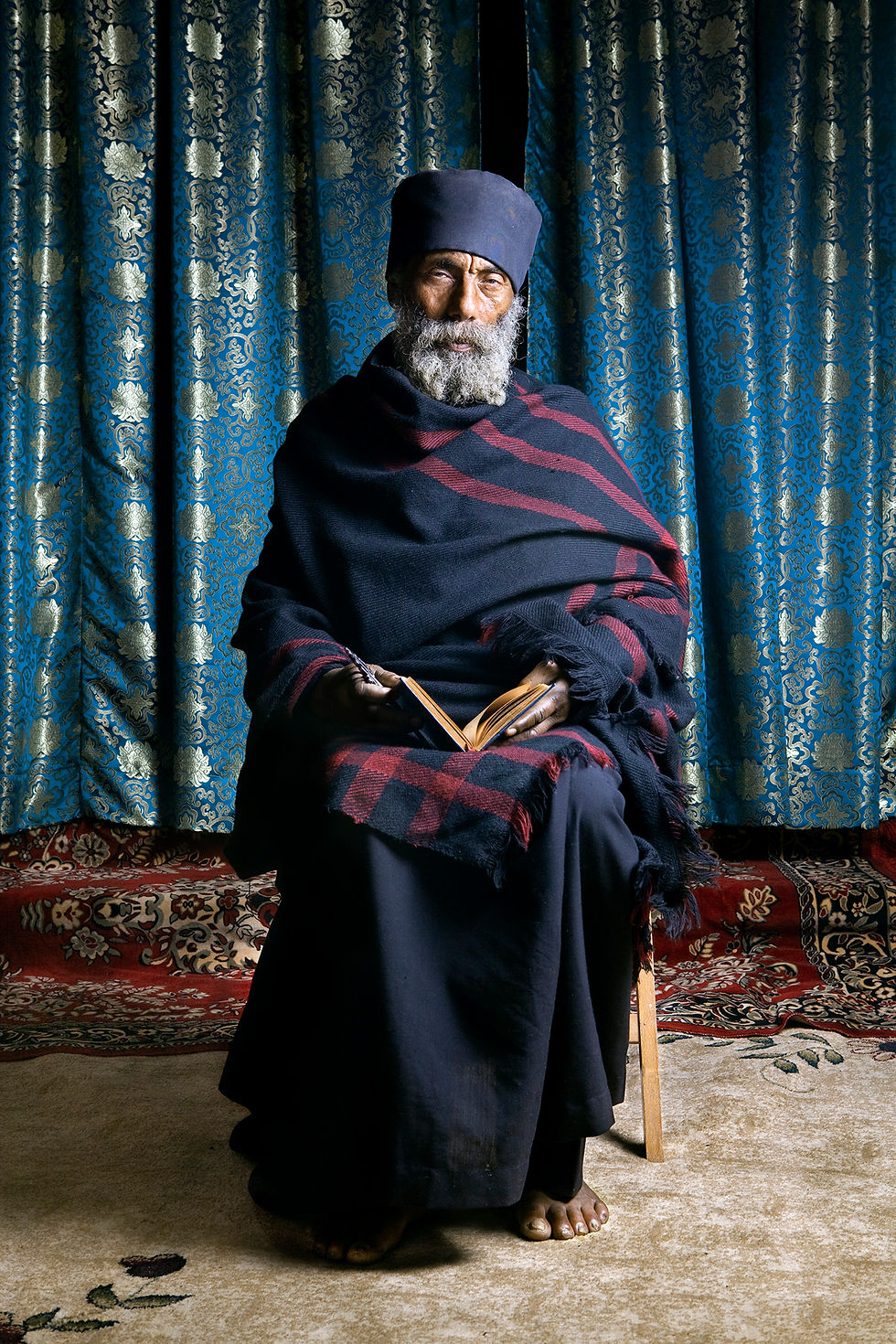
Priests from the Orthodox Ethiopian Church
The Ethiopian Church is one of the most ancient churches in the world. Its members believe that they are the descendents of King Solomon and the Queen of Sheba. The Church’s center is divided between Jerusalem and Ethiopia, and believers travel on a pilgrimage to Israel to celebrate their holydays.

3rd prize
Series
Portraits
Independent
Ammar Younis
In the framework of the Umm el-Fahem Art Gallery, the elderly of Wadi Ara and the vicinity are documented, in an attempt to tell their private and collective history beginning with the days before the establishment of the State of Israel until the present.
Culture and Art

1st prize
Single
Culture and art
Independent
Tomer Neuberg
Actor and director Assi Dayan, behind the scenes with his mother, Ruth Dayan, before receiving a lifetime achievement award at the Ophir Awards ceremony, Haifa.

2nd prize
Single
Culture and art
Independent
Gabriel Baharlia
Author, A.B. Yehoshua, and editor Menachem Peri preparing for the new edition of the book "A Late Divorce".

3rd prize
Single
Culture and art
Ilan Spira
Yedioth Ahronoth
Assaf Amdursky looking at a photograph of himself with his father, Benny Amdursky, taken by Vardi Kahana. Spira’s photograph was taken during the shooting of a TV series in which artists were confronted with the memory of their famous fathers.

1st prize
Series
Culture and art
Independent
Oren Izre’el
The evening of Holocaust Memorial Day, behind the scenes, Ghetto, the Cameri Theatre, Tel Aviv.

2nd prize
Series
Culture and art
Independent
Michal Fattal
The Palestinian circus was founded in Ramallah in 2006 with the objective of providing the children and youth with circus skills. In the series: school children training; behind stage; a joint performance with the “Clowns without Borders” from Ireland; a circus performance based on the life of Palestinians living behind the Separation Fence.
.jpg)
3rd prize
Series
Culture and art
Nikita Pavlov
Nikita Pavlov
Maariv
Mesugnanim (Stylized).
Figures from the world of culture and design photographed in their homes. The series raises issues relating to Israeli style.

1st prize
Single
Urbanism and culture
Haaretz
Daniel Bar-On
The Kiryat Yovel neighborhood, Jerusalem.

2nd prize
Single
Urbanism and culture
Flash 90
Kobi Gideon
The Azrieli Towers, a view from a conference room.

3rd prize
Single
Urbanism and culture
Independent
Doron Nissim
Northern Tel Aviv.

1st prize
Series
Urbanism and culture
Independent
Tomer Ifrah
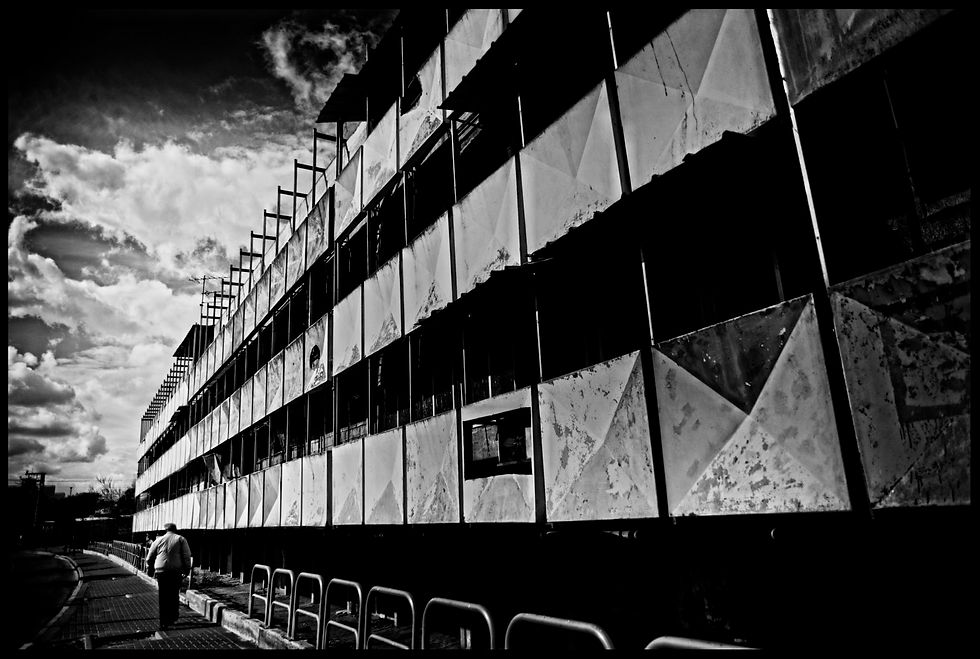
Documentation of the construction of highrise buildings in Tel Aviv, and the foreign workers who build them.
2nd prize
Series
Urbanism and culture
Independent
Yuval Tebol
Urbanism and the human factor

3rd prize
Series
Urbanism and culture
A.P.
Maya Hitij
Palestinian graffiti has become popular since the early days of the first Intifada in 1987. It was used primarily for updating the residents on demonstrations and strikes. The graffiti artists were perceived as heroes pursued by the occupying forces. Today artists use graffiti in order to glorify or ridicule political and military figures, Israelis and Palestinians alike, and to describe political struggles. In addition, graffiti is used to congratulate newly-weds and welcome pilgrims on their return home.
Nature and Environment

1st prize
Single
Nature and environment
Independent
Omer Messinger
Young surfers at the Poleg Beach, Netanya, on a stormy day.

2nd prize
Single
Nature and environment
Independent
Doron Talmi
Horses in a snow-covered vineyard, the Golan Heights.

3rd prize
Single
Nature and environment
Independent
Gilad Peli
Bush fire along the oil pipe route, the Golan Heights.

1st prize
Series
Nature and environment
Independent
Doron Nissim
The drying up of the Dead Sea, a documentary journey

2nd prize
Series
Nature and environment
Independent
Shlomi Nissim
A fire in the fields of Kibbutz Ga’ash on the western side of the Coastal Road.

3rd prize
Series
Nature and environment
Independent
Yuval Tebol
The workers’ camp at the Potash Company, today the Dead Sea Works, was set up in 1934 in Sodom and was running until 1950. The camp served as the living quarters for the workers and their families. Recently preservation work has begun in preparation for the camp’s opening to visitors.
Sport

1st prize
Single
sport
Independent
Shlomi Nissim
Aviv Vaknin, a professional windsurfer who fell from a 35 meter cliff, after two years of rehabilitation. This is the fifth consecutive year in which he is Israel’s champion windsurfer.

1st prize
Single
sport
Ruvan Shwartz
Yedioth Ahronoth
Hapo’el Tel Aviv fans watching their team train at the Yaakov Hodorov training field.

2nd prize
Single
sport
Independent
Ronen Topelberg
The “Golden Ring” cycling road race along a 120 kilometer route. The cyclists are seen climbing the road from Hamat Gader to the southern part of the Golan Heights.

3rd prize
Single
sport
Polaris
Ziv Koren
A parkourist jumping off a pole on the Tel Aviv beach.

1st prize
Series
sport
A.P.
Muhammed Muheisen
Muhammed Shuhada, a 70 year old Palestinian from Jenin, former professional boxer, today works as a trainer and operates the first gym in the Palestinian Authority.

2nd prize
Series
sport
Independent
Gilad Kavalerchik
Documentation of the Triathlon competition that combines three types of sports: swimming, cycling and running.

3rd prize
Series
sport
Independent
Tomer Ifrah
Hagar Feiner, women’s world boxing champion, won the title after long years of disappointment and losses in crucial fights. The series was photographed during the period prior to the fight in defense of her title at the Nokia Arena in Tel Aviv.