

Gilad Kavalerchik
Local Testimony 2015
Gallery
2015
Photo of the Year | Series of the Year | News | Society and Community | Religion and faith | Nature and Environment | Sport | Urbanism and Culture | Long Exposure | Video
LOCAL TESTIMONY 2015
DANA WOHLFEILER-LALKIN, INITIATOR AND MANAGER OF LOCAL TESTIMONY
The work of photojournalism and documentary photography is complex. In his work, the phonographer draws on a myriad of skills, which require sharp instincts, quick reflexes, a recognition of the strength of the image and its contribution to the construction of the narrative, a sensitivity to the photographed human condition, and a creation of a composition of historical and cultural value. The photographer must make use of these multiple skills, while simultaneously confronting the limitations of the field, exposure to physical threats and difficult changing weather and light conditions throughout long and unusual hours of waiting. The photo is hence forged from the
amalgamation of the photographer's observation, alertness, astuteness, and his sense of purpose.
These days, we find ourselves, once again, facing a complex and turbulent political situation and a growing concern from an escalation. The photos and images of the knife events of the fall of 2015, which are washing over the media, demonstrate the pivotal place of the visual expression in the formation of the documented political reality. In an era in which governments and organizations make every possible effort to seize control of our conception of reality, the cultural role of photojournalism and documentary photography becomes even more crucial, as the public must also take more responsibility, and must consume the images with care critic, as well as diligently read the information surrounding them.
The members of the Local Testimony editorial board meticulously follow the development of the language of photography, media, and documentation in order to sustain a meaningful selection process and showcase an annual exhibition of the finest photographs.
Local Testimony works at the service of the photographers, whose work makes the exhibition possible, and the vast audience visiting it every year. New trends in photography, technological developments, and changing ethical considerations are only some of the issues that lie before us.
We consider it of great importance that photographers find in Local Testimony a permanent residence, which represents the cultural and social significance of their work. We will continue to promote the field of hotojournalism and documenting photography, with the well-deserved appreciation and respect to all those who engage in this complex field.
Local Testimony is an annual exhibition of photojournalism and documenting photography, which has been showcasing in Israel since 2003, alongside the international exhibition World Press Photo. Local Testimony provides a framework to express the cultural qualities of local documentary photography and demonstrate its cultural significance. This form of photography manifests a complex dimension of human life, which does not receive full exposure in mainstream media. My gratitude to the jury for their devoted and meticulous work during the different
phases of the judgment process, up to the crucial phase of selecting the photos to be showcased in the exhibition.
A BANAL PHOTO
VARDI KAHANA, LOCAL TESTIMONY CURATOR
The photo Jon and Alex has granted Mads Nissen, a Danish photographer, the Photo of the Year prize in the World Press Photo contest. The text accompanying the photo, reads as follows: “… a gay couple share an intimate moment at Alex’s home… Life for lesbian, gay, bisexual and transgender (LGBT) people is becoming increasingly difficult in Russia. Sexual minorities face legal and social discrimination, harassment, and even violent hate-crime attacks from conservative religious and nationalistic groups."
The winning photos of WPP contest throughout the years, have given the world glimpses of wars, severe conflicts, and natural disasters, primarily in the Third World and the Middle East. Therefore, it seems, on January 2015, that there is a declarative dimension in the selection of the winning photo made by the international jury of the WPP, which is based in Amsterdam. As if they are saying: after years of focusing on the endless wars raging in remote regions, we can, for a change, expose what is happening close to us - enlightened Europe - in a powerful neighboring nation.
The jurors' agenda is apparent not only in their choice of topic, but also, and maybe especially, in the way it is represented. Two lovers in a romantic, soft, ideal image. A photo, which in the West would be considered banal, yet, in the country in which it was taken it is a dangerous provocation.
When the winner was announced in January 2015, one would assume that in enlightened and democratic Israel, his photo would be considered banal, too beautiful, kitsch, and, anyway, the LGBT community in Israel is recognized and receives frequent representation in Local Testimony, in colorful photos from the Gay Pride Parade in the “society” category. The “News” category is mostly reserved for photos of the Israeli-Palestinian conflict.
And then August 30th arrived, the day in which, one, Yishai Schlisse, broke into the ranks of the Gay Parade in Jerusalem, with only one purpose – to murder. He drove his knife into the bodies of seven youths. Shira Banki, a 16 years old high school student, died from her stab wounds three days later.
And while he was yet speaking, there came also another. The following night, August 31st, anonymous jewish terrorists threw Molotov cocktails in Duma village and set fire to the home of the Dawabsheh family, with all its residents in it. Baby Ali was burnt to death; and a few days later, after a prolonged struggle for their life, his parents, Saad and Reham, died from their injuries. Four years old Ahmad, the only one of his family to survive, suffered severe burns on his entire body.
Is there a difference between the murderer Yishai Schlisse and the beheading Isis terrorists? And is there a real difference between those who murdered the Dawabsheh family and those who murdered the Fogel family? They all murdered in the name of God, with deliberate malice, a sacred evil, and a hatred of the other.
These are the harsh events, which represent the news of the passing year. The ramifications continue to haunt us, and will most likely determine the public agenda for many days to come. As these very lines are written, Israel is flooded with a wave of stabbing terrorist attacks. One attack follows on the heels of another. And in response, vindictive acts of violence are committed.
These days, hatred is the discourse.
Local Testimony is left with only one responsibility - placing the mirror in front of us. Be it as difficult, bloody, and ugly as it may be.
If we could only have selected for the photo of the year a banal image of two lovers.
Zachi Becker - Deputy Director General of Eretz Israel Museum, Tel Aviv
Deganit Berest - Artist and Teacher
Ashraf Fawakhry - Artist, Communication and Media Professional
Yon Feder - Chief Editor, Yedioth Internet
Vardi Kahana - Photographer and Curator of Local Testimony 2014 and 2015
Micha Kirshner - Artist and Teacher
Avi Koren - Film Photographer and Teacher
Dafna Shalom - Photographer
Moran Shoub - Photographer, Curator, and Member of the Local Testimony Editorial Board
Photo of the year

AFP
Menahem Kahana
Palestinian women dismayed at the sight of the house of the Dawabsheh family.
Duma village, south of Nablus
3 August 2015
Series of the Year


Kobi Wolf
The Jordan Valley - A Firing Zone
The Jordan Valley, which was occupied in 1967, is a large region with a sparse population. 2,700 Palestinians inhabit these terrains, in twenty shepherding communities. Throughout the years, the state of Israel declared large regions in the valley as firing zones. From time to time, the army informs the communities that they must temporarily evacuate for training purposes. The frequent evacuations stir fear and uncertainty among the inhabitants. Every time they are evacuated, the families are forced to leave behind their homes and some of their belonging, pack basic equipment, leave with their children and their herds, and find shelter from the weather elsewhere. Unexploded shells left on the grounds after the training severely injure the shepherds and have even caused the deaths of some.
3 August 2015
Duma village, south of Nablus
News

1st prize
Single
News
Emil Salman
Haaretz
Police holding down Yishai Schlissel, a few seconds after he stabbed and severely injured seven participants of the Gay Pride Parade. The stab wounds caused the death of Shira Banki, a 16 years old high-school student. Schlissel committed the stabbing a month after his release from a ten year prison sentence for a similar offence: attempt of murder of three participants of the Gay Pride Parade in Jerusalem in 2005.
Jerusalem
30 July 2015

2nd prize
Single
News
Kobi Wolf
Business owners in the Muslim quarter locking their shops, due to a closure imposed on the Old City, following the assassination attempt on Yehuda Glick.
The Old City, Jerusalem,
אוקטובר 2014

3rd prize
Single
News
Noam Moskowitz
Disturbances after Friday prayers at Ras al-Amud neighborhood.
East Jerusalem
October 2015

1st prize
Series
News
Activestills
Oren Ziv
On July 31, Molotov cocktails were thrown into the bedroom of Dawabsheh family, setting the house with its residents in it on fire. Baby, Ali Saad, was burnt to death and his parents, Saad and Reham, died from their injuries after several days of struggling for their lives. Four years old Muhammad suffered burns all over his body. The writings sprayed outside their house and other findings on the ground pointed towards the involvement of extreme right wing activists. The deadly arson was part of a string of Jewish terrorist acts, in which churches and mosques were set on fire. The severe terrorist attack led to disturbances in the territories, worldwide condemnation, and international protests. A few right-wing extremists were placed in administrative detention; however, up to writing these very words, no one has been brought to trial on suspicion of involvement in this act.
Duma village, south of Nablus
31 July 2015

2nd prize
Series
News
Dan Haimovich
Youths from the Ethiopian community protesting against racism, discrimination, and police brutality.
The protesters demonstrated in front of the government offices next to Azrieli Towers, blockaded Ayalon Highway, and marched through the streets up to Rabin Square. The gathering in the square was turbulent and the police used horses, water hoses, and flash grenades to disperse it.
Tel Aviv
3 May 2015 and 22 June 2015

3rd prize
Series
News
Uriel Sinai
The New York Times
lections 2015
Image Description:
Isaac (Bougie) Herzog
City Market, Beit She'an
February 2015

Single
News
Emil Salman
Haaretz
Elections 2015. Prime Minister Benjamin Netanyahu enters Harel Hall at the Prime Minister’s Offices, in which he held the press conference announcing his decision to dissolve the government and hold new elections.
Jerusalem
2 December 2014

Single
News
Reuven Kastro
Elections 2015. Zehava Gal-On in an elevator on her way to the lecture hall.
Ramat Gan College
מרס 2015

News
Edward Kaprov
Elections 2015. Isaac (Bougie) Herzog visits the Orthodox Archbishop at his home.
Haifa
December 2014

Single
News
Flash 90
Amir Levy
Selfie. Prime-Minister’s wife, Sara Netanyahu, at a meeting with lone soldiers.
An army base in the center of Israel
March 2015

Single
News
Walla NEWS
Reuven Kastro
Election 2015. Avigdor Lieberman in the makeup room before a broadcast.
Tel Aviv
February 2015

Single
News
Walla NEWS
Dror Einav
The five decades land dispute at Neve Amal ended this year, much to the charging of many residents. Four towers with eight-hundred apartments will be built in the area, which is considered one of Israel’s most prestigious real estates.
Tel Aviv
September 2014

Single
News
Getty Images
Ilia Yefimovich
A Palestinian youth taking a break from throwing stones, during the riots in Issawiya.
Jerusalem
October 2014

Single
News
AP
Ariel Schalit
An arson terrorist attack on the Church of the Multiplication, one of the sacred Christian sites within the areas of the state of Israel. Serious damage was caused to the structure, and the hallway was destroyed and blackened. Graffiti was sprayed on the wall citing “falls idols will be smashed” - a quotation from the Aleinu Leshabe’ach (We must praise the lord) prayer, which relates to the abolition of idol worship. The suspects, two right-wing, Jewish extremist, were apprehended and brought into custody.
Tabgha, Shore of the Sea of Galilee
18 June 2015

Single
News
GPO
Haim Zach
Following Operation Protective Edge, Secretary-General of the UN Ban Ki-moon takes a tour of one of the tunnels of the Hamas.
Kibbutz Ein HaShlosha,
October 2014

Single
News
EPA
Atef Safadi
Gay Pride Parade.
Jerusalem
30 July 2015

Single
News
GPO
Kobi Gideon
The synagogue foyer at Har-Nof neighborhood, after the terrorist attack that claimed the lives of five of the people who came to pray, as well as a police officer.
Jerusalem
18 November 2014
Society and Community

1st prize
Single
Society and community
EPA
Abir Sultan
A child from the Jewish community in Hebron mimicking an IDF soldier, who is patrolling the street while the President of Israel, Reuven Rivlin, visits the city.
Hebron
February 2015

2nd prize
Single
Society and community
Reuters
Amir Cohen
An African migrant leaving the Holot detention center in Ktzi’ot, after the supreme court ruled that the detention period will not exceed 12 months.
Ktzi’ot
August 2015

3rd prize
Single
Society and community
Felix Lupa
Palestinian families from Ramallah visiting the beach.
Jaffa
22 July 2015

1st prize
Series
Society and community
Activestills
Oren Ziv
On January 14, Sami al-Jaar was killed during a police drug bust in his neighborhood. Thousands participated in his funeral procession. A police car, which happened upon the crowd, caused an uproar and was stoned. Police forces were called to assist, and shot tear gas and sponge grenades in the cemetery. Sami Ibrahim Zayadna died as a result of inhaling the gas, and dozens were wounded. The death of the two Rahat residents caused a surge of outrage and sparked a wave of protests. The protests against the conduct of the police, as well as the many years of discrimination, led to violent disturbance, which lasted a few days.
Rahat
18-20 January 2015

2nd prize
Series
Society and community
Edward Kaprov
A family workshop for clay vessels.
Hebron
October 2014

3rd prize
Series
Society and community
Avshalom Levi
Avshalom Levi, native of Musrara, returns to his childhood heroes, the leaders and activists of the "Black Panthers" movement, and raises a "wall of fame" in their honour.
Tel Aviv-Jerusalem,
February 2012-August 2015
Religion and Faith
1st prize
Single
Religion and faith
Elad Malka
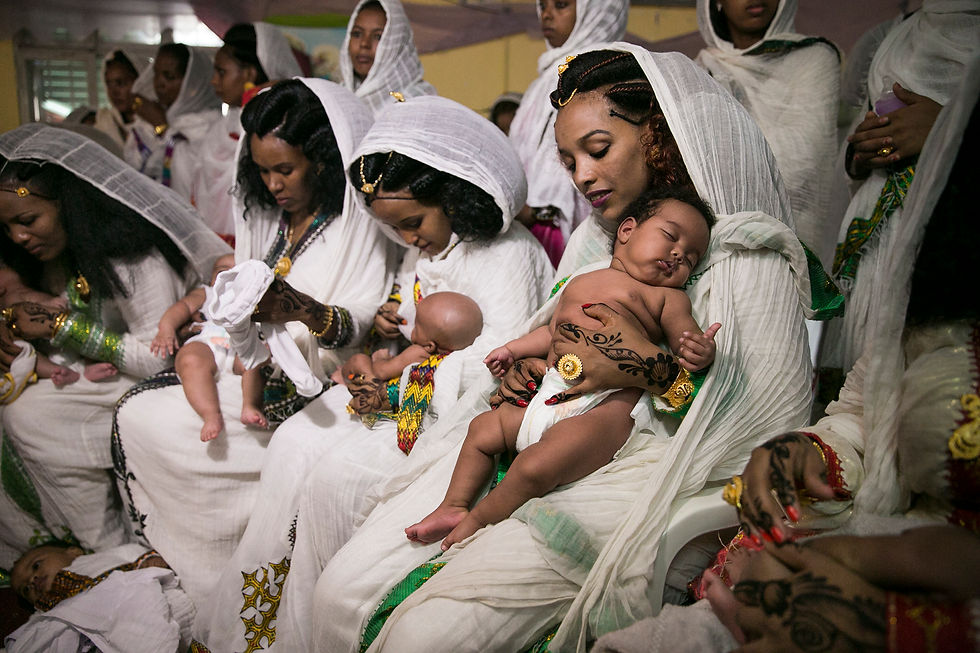
Women of the Eritrean community preparing their infants, who were born in Israel, for the traditional baptism. The baptism rituals take place every Saturday in an old textile factory, which has been transformed into the central church in south Tel Aviv. The members of the community put on their best garbs, gather together, and leave their everyday reality behind them, to celebrate.
Tel Aviv
אוגוסט 2015

2nd prize
Single
Religion and faith
Getty Images
Lior Mizrahi
Reading the Book of Lamentations in candle light, on Tisha B’Av. Synagogue in Mea She’arim.
Jerusalem
July 2015

3rd prize
Single
Religion and faith
Yedioth Ahronot
Ohad Zwigenberg
Thousands attended the funeral of Yitzchak Samet, who was trampled to death a day before, at the mass funeral of Rabbi Shmuel Halevi Wosner, a prominent Ultra-Orthodox (Haredi). The funeral, which took place during the passover holiday, left from the Beith HaMidrash of the Toldot Aharon Hasidut at Mea She’arim. Yitzchak’s young brother looks up at the camera. The Hasidim surrounding him are lavishly dressed because of the holiday.
Jerusalem
8 April 2015
1st prize
Series
Religion and faith
Flash 90
Yonatan Sindel
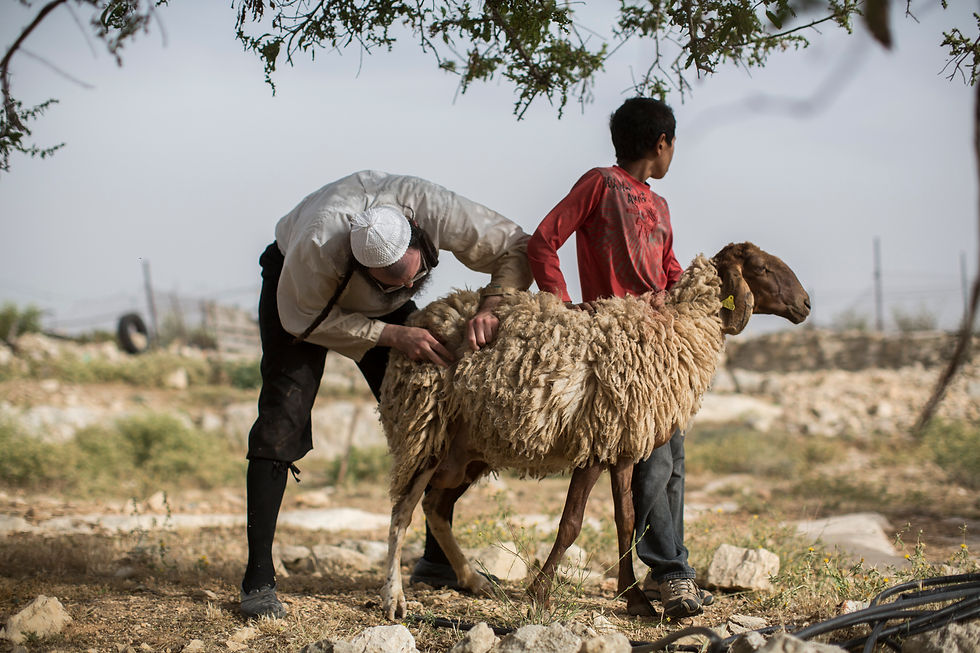
Hasidim from Jerusalem recreate the "First of the Fleece" commandment, according to which the first production of fleece for the season is given to the Kohen, as is written: "The first fruit also of thy corn, of thy wine, and of thine oil, and the first of the fleece of thy sheep, shalt thou give him" (Deuteronomy 18:4).
The Tomb of Samuel (Nabi Samuel)
May 2015

2nd prize
Series
Religion and faith
Dan Haimovich
The funeral of Rabbi Chaim Shaul Greinemann. Despite the pouring rain and the difficult weather conditions, thousands of followers accompanied the rabbi, who was considered one of the outstanding rabbis of his time, on his last journey.
Bnei Brak
April 2015

3rd prize
Series
Religion and faith
Flash 90
Hadas Parush
On April 2015 the Armenian community marked, in various ceremonies throughout the world as well as in the Old City’s Armenian Quarter, a hundred years for the Armenian Genocide by the Ottoman regime in Turkey.
Jerusalem
April-October 2015

Single
Religion and faith
AP
Ariel Schalit
Viznitz Hasidim at the funeral of Rabbi Eliezer Hager, who passed away at the age of 91.
Haifa
July 2015

Single
Religion and faith
Gabi Ben Avraham
Kaparot (literally “atonements”) ritual in Mea She’arim.
Jerusalem
October 2014

Single
Religion and faith
Amir Levy
Purim celebration at the Viznitz Hasidut.
Bnei Brak
March 2015
Nature and Environment

1st prize
Single
Nature and environment
דורון ניסים
Following the increase of the security threats and the migration of African citizens from Sinai, a long iron fence was raised along the Israeli-Egyptian border, twisting and turning between the mountains of Eilat.
Nahal Gishron, Eilat Mountains
September 2014

2nd prize
Single
Nature and environment
EPA
Abir Sultan
Dr. Thomas Hildebrandt, a world-renowned German expert in the field of elephant fertility, treating the female elephant Tamar, at the Biblical Zoo.
Jerusalem
November 2014

3rd prize
Single
Nature and environment
Gabi Ben Avraham
Dogs at an adoption event, which takes place every Friday at Gan Meir.
Tel Aviv
אפריל 2015

1st prize
Series
Nature and environment
EPA
Abir Sultan
The Dead Sea is dying. Today, the typical shape of the Dead Sea and the famous peninsula may only be found in old maps and memories. Human hands have caused water levels to drop 40 meters during the last five decades. The level continues to drop a meter a year. All that is now left is the northern basin - a long and narrow strip growing smaller and smaller.
Dead Sea
September-December 2014

2nd prize
Series
Nature and environment
Moshe Prager
The black-winged kite (Elanus caeruleus) is a small diurnal bird of prey, which has been nesting in Israel in the last several years. The black-winged kite hunts voles and mice, and is used as a biological pesticide to help the farmers protect their crops.
Nahal Bet ‘Arif, near Shoham
June 2015

3rd prize
Series
Nature and environment
Alex Levac
Haaretz
Contrary to the conventional image of agriculture in the Arabah as a success story, the reality on the ground is strikingly different. Failed government policy and competition over export are only two of the factors which have deteriorated agriculture throughout Israel, including in the Arabah: “I have been living in Moshav Tzofar for the last six months, and the sight of hundreds of acres of abandoned greenhouses shocked me to the core. I tried to convey this sad story in my photographs”.
Moshav Tzofar
August 2015

Series
Nature and environment
Uriel Sinai
The New York Times
With its part-Mediterranean, part-desert climate, Israel has been suffering for decades from a chronic
shortages of water and an over-exploitation of its natural water resources. A major national effort to desalinate Mediterranean seawater and to recycle wastewater has provided the country with enough water, even during severe droughts.
April 2015

Series
Nature and environment
Doron Nissim
On the night of December 3rd 2014, during works to transfer the Eilat-Ashkelon pipeline, the pipe was
breached. Five million liters of crude oil leaked and quickly spread over the unique one-thousand acres nature reserve – home to the largest population of docras gazelles in the world. The contamination caused immediate damage to hundreds of animals, mainly reptiles and insects. In the long run, the damage is expected to spread to the larger animals and plantation.
Evrona Nature Reserve (Southern Arabah)
דצמבר 2014

Series
Nature and environment
AFP
Menahem Kahana
Still life. A series of photographs taken in the course of three years. In the photographs, unusual combinations of flora and inanimate objects.
Throughout Israel
February 2014-August 2015

Single
Nature and environment
Jonathan Sheffer
A dog watching the Milky Way on the night of the meteor shower. The lights in Mitzpe Ramon were turned out in honor of this rare occasion. The photograph was taken with long exposure on a tripod.
Mitzpe Ramon
August 2015

Single
Nature and environment
EPA
Abir Sultan
A young traveler snorkeling in Ein al-’Uja spring, side by side with sheep (belonging to Palestinian sheepherders) drinking from the spring.
Ein al-‘Uja, The Jordan Valley,
April 2015

Single
Nature and environment
Gilad Peli
Fisherman diluting the fish, in order to keep the water in the Golan reservoirs clean.
Merom Golan
August 2015
Sport

1st prize
Single
sport
Arnon Azmon
Pole-vaulter Itamar Basteker, in the Inter Association League athletics competition.
The Athletics Stadium, Rishon LeZion
January 2015

2nd prize
Single
sport
Gabriel Baharlia
Shimon Mizrahi, chairman of the Maccabi Tel Aviv Basketball Club=
Yad Eliyahu Sport Palace, Tel Aviv
May 2015

3rd prize
Single
sport
Yedioth Ahronot
A sea turtle swimming under the three leading athletes in the Olympics Heats of the Israeli triathlon championships.
The Red Sea, Eilat
December 2014

1st prize
Series
sport
Reuters
Ammar Awad
Anoush Belian from the Armenian Quarter in the Old City is the first Palestinian bodybuilder to participate and even win an Israeli competition. Belian won the "Miss Fitness" category of the National Amateur Bodybuilders Association (NABBA) in Israel.
Jerusalem
August 2015

2nd prize
Series
sport
Tsafrir Abayov
Israeli cycling championship in a race against the clock. Road 234, near Kibbutz Re’im, close to the Israel-Gaza border.
Gaza Envelope
June 2015

3rd prize
Series
sport
Arnon Azmon
Semi-finals in Israeli rugby between Yizre’el and Ra’anana teams.
Kibbutz Yizre’el,
February 2015

Series
sport
Gilad Kavalerchik
Yedioth Ahronot
"By Bike Way" is a cycling competition through a 106.8 km long track. Each cyclist must navigate the path by himself. The unmarked terrain and the difficult weather conditions cause dozens of cyclists to drop out of the competition.
Hevel Lakhish
January 2015
Urbanism and Culture

1st prize
Single
Urbanism and culture
Ohad Zwigenberg
Yedioth Ahronot
During the hot summer days, many children visit Teddy Park with their parents to cool in the waters of the fountains.
The Old City, Jerusalem
June 2015

2nd prize
Single
Urbanism and culture
Dror Einav
Walla NEWS
Children watching the hot-air balloon device at HaYarkon Park.
Tel Aviv
April 2015

3rd prize
Single
Urbanism and culture
Gabriel Baharlia
Poet Erez Bitton, recipient of the Israel Prize for Hebrew Literature and Poetry of 2015.
Tel Aviv
March 2015

1st prize
Series
Urbanism and culture
EPA
Abir Sultan
In an attempt to make reality more beautiful, Elyasaf Miara paints on shelters in the Gaza Envelope settlements. His technique and the subject of his paintings help him integrate the ugly concrete bodies into the local scenery, and thereby exude a certain sense of tranquility.
Gaza Envelope
June 2015

2nd prize
Series
Urbanism and culture
APF
Menahem Kahana
Around 70 thousand Bedouins live without infrastructure, water, and electricity in villages, which are not recognized by the state of Israel. Some work in Jewish settlements in farming and construction, while others grow sheep and goats. During the last several years, the modern lifestyle has led many families to move to permanent settlements. Nonetheless, tens of thousands of Bedouins prefer to continue and live on their lands, and preserve their traditional way of life in the open spaces of the Negev, at the cost of a constant confrontation with the state authorities.
Northern Negev,
January-February 2015

3rd prize
Series
Urbanism and culture
Tamar Lederberg
The view from an elevator overlooking the Oil Refineries, reveals a warp and woof of complex of pipes, steel construction, and chimneys. The oil refineries, which employs thousands of employees,
seems deserted.
Oil Refineries, Haifa
ספטמבר 2014

Series
Urbanism and culture
EPA
Abir Sultan
Midburn. Around 7,000 Israelis participated in the Midburn festival in Sde Boker, the Israeli parallel of the Burning Man festival in Nevada, United States. Four days of a colorful celebration and self-expression.
Sde Boker,
May 2015

Single
Urbanism and culture
Shlomi Yosef
Carmel Beach Tayelet (boardwalk).
Haifa
October 2014

Single
Urbanism and culture
Bonnie (Manns) Levron
Rowing in the Ayalon River.
Tel Aviv
June 2015

Series
Urbanism and culture
Amir Levy
Ajami neighborhood, Jaffa
2015-2014

Single
Urbanism and culture
Gaya Sa'adon
Demolition of a building on Yehuda HaLevy Street, as part of the preparation works for the construction of the light rail track.
תל-אביב
July 2015

Single
Urbanism and culture
Isaac Shaoul
Winter day at the Tel Aviv port.
Tel Aviv
January 2015
Long Exposure

1st prize
Series
Long exposure
Yuval Tebol
“Land Research” is a photographic journey spanning over years, over the borders of Israel - a journey, which, through the language and tools of photography, questions various aspects of borders: time and space, memory and imagination, internal and external. The project was photographed in a black and white negative on a medium format film camera.
Israel and the West Bank, Egypt, Gaza and Jordan borders
December 2014-August 2015

2nd prize
Series
Long exposure
Reuters
Ammar Awad
The Selfie Rock. A new custom has grown in the site Muslims call the holy site and the Jews Temple Mount, in the Old City of Jerusalem. Palestinians, both young and old, stand at the anterior of what is considered an architectural masterpiece – The Dome of the Rock – and take a selfie.
Jerusalem
February-July 2015

3rd prize
Series
Long exposure
Nitzan Hafner
The Jerusalem living history group Regnum-Hierosolymitanum (aka Kingdom of Jerusalem Club) annually reenacts the famous Battle of the Horns of Hattin, in which Salah ad-Din’s forces defeated the crusaders, who ruled the land of Israel. Almost all of the members of Israel’s historical reenactment clubs, as well as visitors from abroad participate in this event. The costumes, weaponry, and tools are made in Medieval traditional methods. The journey and the battle at its end are carried out with as much precision as possible with respect to the historical events and the archaeological findings.
Tzipori, Lavi Forest area and Karnei Hittin National Park
July 2015
Video
Daniel Bar On
Reuven Adler, advertiser and strategic advisor, retuned from his retirement to manage Isaac (Bougie) Herzog and Tzipi Livni’s campaign, in the belief that this time, as well, he would lead candidates to victory.
March 2015
Director: Ben Shani
Photographer: Daniel Bar On
From: Four Minutes, a project of the television program "Uvda" (Fact), Keshet Broadcasting
Daniel Bar-on
Ruby and Nechama Rivlin.
A day in the company of the incoming president and his wife, Reuven (Ruby) and Nechama Rivlin.
November 2014
Director: Ben Shani
Photographer: Daniel Bar On
Assistant photographer: Nir Kafri
From: Four Minutes, a project of the television program “Uvda” (Fact), Keshet Broadcasting