
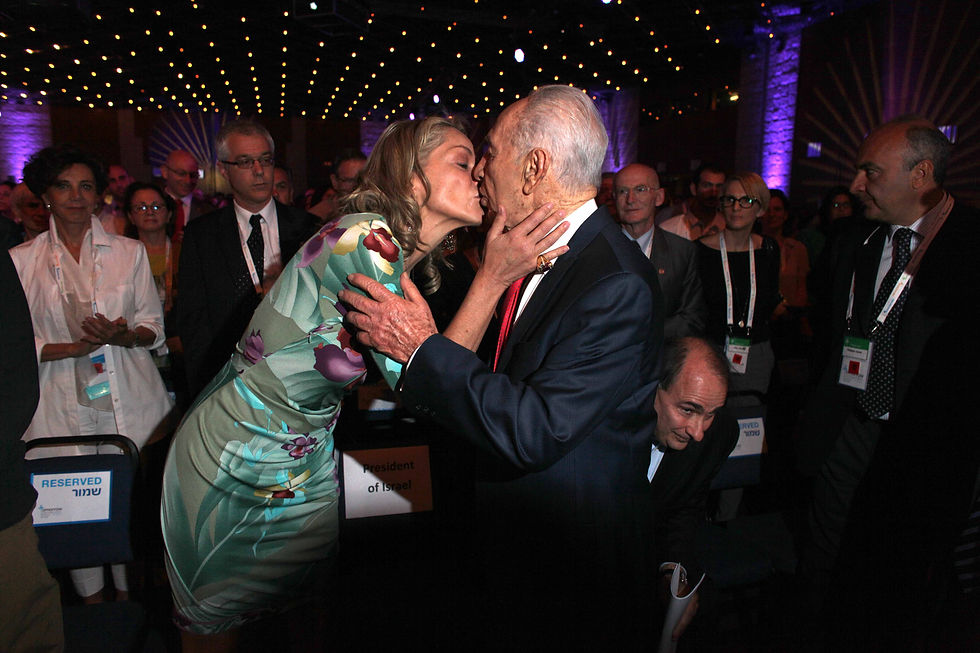
Photography: Daniel Bar On
Local Testimony 2013
Gallery
2013
Photo of the Year | Series of the Year | News | Society and Community | Religion and faith | Nature and Environment | Sport | Urbanism and Culture | Short Series | Long Exposure | Video
LOCAL TESTIMONY 2013
Dana Wohlfeiler-Lalkin, initiator and manager of Local Testimony
Local Testimony is an annual press and documentary photography exhibition which has been held in Israel since 2003 alongside the international World Press Photo exhibition. Local Testimony provides a stage for the cultural qualities created by the photographers, concretizing the social importance of local documentation. This type of photography reveals the human and complex side of our existence which is not fully exposed in the conventional media.
This year Local Testimony marks its tenth anniversary. The exhibit comprises photographs selected by the jury, and a
special exhibit which presents photographs displayed in Local Testimony over the past decade. These important photos underscore the iconic part photography plays in key historic moments, and the special role of photographers in creating an original language of documentary photography.
Reviewing the numerous photographs in our archives collection evokes memories mixed with a sense of repeating recollections. The photo of Ariel Sharon sitting alone in the museum, the photographs documenting the disengagement, the Occupation, the Second Lebanon War, fighting in the Gaza Strip and the social protest - all heighten awareness to the fact that everything remains static - local testimony to a ticking regional reality.
Since I founded the exhibition and over the years the changing names of photographers in the exhibition and their increasing absence from the press and media publications is notable. There is a sense that this is not merely an evolutionary issue.
I always saw a dimension of calling and activism in photojournalism and documentary photography, a profession which goes far beyond merely making a living, or as Robert Frank so aptly puts it, “Above all, life for a photographer cannot be a matter of indifference.” I follow the existential reality of the field of documentary photography with interest and concern, and seek, together with the exhibition’s editorial board, new ways to reinforce its creators.
As of 2009, Local Testimony has found apermanent home and a faithful partner with the Eretz Israel Museum, Tel-Aviv.
In addition to the annual exhibition, Local Testimony develops theoretical programs that bring artists together in joint workshops. Frames of Reality, a workshop designated for Israeli and Palestinian press and documentary
photographers, was designed to enhance the capacity of editing, writing, and personal expression of the photographed story.
Last year Local Testimony’s editorial board, together with the Eretz Israel Museum, has developed and produced the Nature Picture exhibition, an annual exhibition of the best nature photographs by Israeli photographers exhibited alongside the Wild Life Photographer of the Year exhibition of the Museum of Natural History in London.
Every year the editorial board of Local Testimony renews and updates all aspects of the exhibition’s production. The jury and curators change every two years in order to offer different angles of viewing when selecting the winning
photographs.
I would like to thank the jury for its faithful and complex work in Local Testimony 2013. I would like to take this opportunity to thank the members of the editorial board, the curators over the years, and particularly the photographers who submit their work year after year. Without you these exhibits would not have been possible.
SNAP MY PHOTO AGAINST THE BACKDROP OF WORDS ALREADY SAID
Moran Shoub, Local testimony 2013 curator
Like destruction a photograph is constant under all the coverings, waiting to be revisited. Viewing the photographs takes us back in time to the stories that remained open, like wounds, and to the ruins before they were buried. Time covers ruins, but severing it by a photograph exposes a vacuum and realities that remained unchanged and in ruins.
In the exhibition space walls surround us on all sides, walls, walls and no ceiling; what do you think the space resembles? A building site? The ruins of a demolished building?
In poem 42 in Yehuda Amichai’s Cycle of Quatrains, the narrator asks to have his photograph taken against the backdrop of the ruins that remained after the war “Snap my photo in the dunes next to the broken tank/Snaps my photo against the backgrop of words already said/ Words that will never be uttered again/ Without hope like the fireworks’ glow…”The fireworks, promising for a moment and then extinguished, resemble a flash that lights up the scene of events, makes the moment of photography possible, and is then blown out. The photograph that immortalizes the time and space of destruction does not offer any future, but forever anticipates destruction. The 10th anniversary of Local Testimony and the thousands of years of this land’s existence attest to the fact that the war over a home, in the simple sense of the word, in the sense of an aspiration and the right to a place to live – wins all. It is not the right to a respectful life that wins, but rather war.
Look at the figures photographed against the background of damaged walls; look at the little girl raising her head toward the ceiling of her bombed home – the distress on the faces of the subjects in the photograph from last year or from fifteen or a hundred years ago - it does not become a routine matter if it is well expressed in the photograph;
time will not blot out the pain of the little girl whose home was demolished. But her photograph, like a city covered in heaps of rubble that mark her past, may illustrate countless situations: destruction, war, terror. “The photograph is the greatest deceiver of culture,” wrote Adam Baruch; the photograph invites interpretations that deny the intention of the original (a photograph of family happiness may be termed the documentation of quiet horror). In other
words, the photograph of the little girl against the background of her demolished home no longer represents a specific child but rather immortalizes the ruins, and therefore, because it does not represent but immortalizes - the method of winners and losers triumphs.
If only we could realize our right notto compete with one another, not to be calculating. Not to destroy. Not to argue.
Muhammad Jabali, content editor, poet, DJ and cultural producer
Galia Gur-Zeev, photographer, curator and member of the Local Testimony editorial board
Dr. Ya’ara Gil-Glazer, researcher and lecturer on the history of photography and visual culture
Diana Dallal, curator
Menachem Kahana, AFP, photographer
Hadas Lahav, ynet, deputy editor
Doron Solomons, video artist, editor and reports for Hadashot 2
David Silverman, documentary and lifestyle photographer
Moran Shoub, Local Testimony 2013 curator
Tal Shochat, artist
Photo of the year

Flash 90
Miriam Alster
The Rosh Hodesh (beginning of the month) Tamuz prayer of the Women of the Wall guarded by the police. Every month the Women of the Wall meet to pray at the women’s section at the Western Wall in Jerusalem, and every month the event is attended by violent demonstrations of the ultra-Orthodox. The struggle of the Women of the Wall for the right to pray and read from the Torah at the Wall culminated in a joint discussion of the Knesset’s Interior Committee and the Committee on the Status of Women, and aroused a stormy discussion.
9 June 2013
Series of the Year


Getty Images
Uriel Sinai
Residents of the southern localities during Operation Pillar of Defense
12-21 November 2012
News

1st prize
Single
News
Ohad Zwigenberg
ynet
Hundreds of ultra-Orthodox, members of Neturei Karta, demonstrated in Jerusalem and Beit Shemesh against construction of a new neighborhood which is scheduled to be built for the ultra-Orthodox in
the Goloventzitz complex in Ramat Beit Shemesh. They claimed that there are ancient burial caves on the site.
14 August 2013

2nd prize
Single
News
Getty Images
Uriel Sinai
Palestinians taking shelter against a shock grenade hurled at them by the security forces during a demonstration on the Nakba Day near Damascus Gate in Jerusalem.
15 May 2013

3rd prize
Single
News
Flash 90
Yaakov Naumi
Followers of Rabbi Mendel Hagar of Vizhnitz crowding in the windows to see their rabbi voting for the 19th Knesset elections in Bnei Brak.
22 January 2013

1st prize
Series
News
Getty Images
Uriel Sinai
Over 100 Syrian civilians have been treated so far in the Ziv Hospital in Safed. They were injured in the civil war in Syria, among them many women and children.
The IDF transferred the injured to the Ziv Hospital in Safed and the Nahariya Hospital. The IDF opened a field hospital near the border in order to provide the wounded with humanitarian treatment. After treatment they return to Syria. The faces of the people photographed were blurred to protect their identity.
28 August 2013

2nd prize
Series
News
Activestills
Oren Ziv
Some 30 thousand ultra-Orthodox convened in front of the Jerusalem induction center to protest against the government’s plan to enforce the recruitment of yeshiva students.
The protest exhibited a rare show of unity among the different streams of the ultra- Orthodox communities. The police force blocked the entrance to the induction center, and confrontations flared up during the speeches. Eight demonstrators were arrested.
16 May 2013
Society and Community
Religion and Faith

1st prize
Single
Religion and faith
EPA
Abir Sultan
Redemption of the first-born son ceremony in the Sadigura Hassidic community in Bnei Brak.
27 December 2012

2nd prize
Single
Religion and faith
Independent
Kfir Sivan
The tombstone of an unknown person in the Hazor cemetery near Ashdod. The photograph was taken during a search conducted by an Eritrean asylumseeker who was looking for his sister’s grave. The sister was shot and murdered by the Egyptians on the border fence between Israel and Egypt.
16 December 2012

3rd prize
Single
Religion and faith
Independent
Avishag Shaar-Yashuv
The bride Ruchie (Rachel) Stranger, a Hassidic bride, is leaving her parent’s home on her way to the huppah (the bridal canopy). Her bridegroom is a member of the Rokach family, descendents of the
Hassidic Rabbi of Belz. Antwerp, Belgium
21 August 2013

1st prize
Series
Religion and faith
Independent
Felix Lupa
Young men and women assembling at a hairdresser salon toward the end of the Gay Parade that took place last summer in Tel Aviv.
7 June 2013

2nd prize
Series
Religion and faith
Independent
Kobi Wolf
Documentation of groups of young settlers called Hilltop Youth, who build and rebuild illegal outposts in Samaria and Benyamin several hours after IDF soldiers dismantled them.
2012 - 2013

3rd prize
Series
Religion and faith
Independent
Guy Steinberg
Meir Berko, aged 34, met Melanie (today Nava) when he was 21 years old, while surfing in the Philippines. Since then they got married, became ultra-Orthodox, and gave birth to six children: Nachman, Yehuda, Natan, Adiel, Tahlia, and Aharon. Meir continues to surf.
October 2012 - April 2013
Nature and Environment

1st prize
Single
Nature and environment
Independent
Eli Atias
The remains of a vehicle on the outskirts of an industrial zone near the Timna copper mines in the Arava.
5 April 2013

2nd prize
Single
Nature and environment
Edi Israel
Maariv and NRG
On a hot spring day a fire broke out in the Lachish Park near Beit Gorvrin. The fire consumed some 30 thousand dunams of natural parkland and harmed unique birds and rare species of vegetation. The firefighters managed to put out the fire only after 48 hours with the help of six firefighting planes. Through the clouds of fire an exhausted stork tries to rise above and fly off to a safe haven.
29 April 2013

3rd prize
Single
Nature and environment
Independent
Moshe Prager
Golden Jackals live in the thicket on the banks of the Yarkon River at Sheva Tahanot and in caves on the outskirts of the city of Ramat Gan. The jackals, that are now used to living near humans, are not afraid. They feed on fish, chickens, and rodents which they catch themselves, but in addition, on leftover food that people throw out into nature or into the garbage.
6 May 2013

1st prize
Series
Nature and environment
Getty Images
Uriel Sinai
The Wildlife Hospital, founded by the Nature and Parks Protection Authority and the Zoological Center Tel Aviv - Ramat Gan (Safari), treats some 2,000 wild animals every year, some live in the Safari and some are native Israeli animals. The largest animals, such as gazelles and jackals, are brought to the hospital by the nature reserve and environmental organization wardens; the smaller animals are brought to the hospital by ordinary people. As Israel is situated on the migration path of numerous birds, a considerable number of birds are treated. Four veterinarians, clinic coordinators and tens of volunteers, along with young people during their military service, comprise the hospital team.
6 September 2012 - 30 June 2013

2nd prize
Series
Nature and environment
Independent
Doron Nissim
Scenes of the Eilat Mountains and the Arava.
Winter 2012 – 2013

3rd prize
Series
Nature and environment
Miriam Tsachi
Makor Rishon and Maariv
Apple orchards in Druze villages near Bukata on the Golan Heights, following damages caused by a storm that raged during the night.
23 December 2012

Series
Nature and environment
Independent
Yoav Friedländer
Landscapes of a beloved country etched on memory that shaped the photographer’s childhood memories, are shown again as scarred landscapes: the Golan Heights, Ashkelon, Judean Desert, Dead Sea, Mitzpeh Ramon, Eilat mountains.
2012 - 2013

Single
Nature and environment
Independent
Eli Atias
A horse in a field of chrysanthemums at the edge of the Hadera Forest.
5 April 2013
Sport

1st prize
Single
sport
EPA
Abir Sultan
Meir Harush, member of Beitar Jerusalem’s board of directors, assessing the damages of the fire to
the Beitar offices in Jerusalem. The offices were set fire by the team’s fans raging against the managers’ decision to acquire two Moslem players from Chechnya.
8 February 2013

2nd prize
Single
sport
Ilan Spira
Yedioth Ahronoth
David Blatt, Maccabi Tel Aviv’s basketball coach, after participating in a short film for the Ezer Mizion health support organization. Winter Stadium, Ramat Gan.
4 February 2013

3rd prize
Single
sport
Independent
Doron Talmi
Tall and long waves attracted tens of surfers to the Atlit shore on a rainy Saturday at the end of April. Rain drops and spray, when touched by the rays of the sun, form a small rainbow in the sea.
20 April 2013

1st prize
Series
sport
Independent
Jorge Novominsky
The Bedouins have a long tradition of raising horses. The Bedouins in Israel run races in three locations: in the region of the unrecognized villages in the Negev, in the village of Zarzir in the north, and in the Juarish neighborhood in Ramla. The races take place under extremely basic conditions. In the Negev the course is makeshift; the judge marks the finish line with his feet in the sand.
March - August 2013

2nd prize
Series
sport
Independent
Quique Kierszenbaum
Hapoel Katamon fans in the Teddy Stadium in Jerusalem. Jerusalem Hapoel Katamon, the anti-racist and first football team in Israel to be owned entirely by its fans, made history gaining promotion to the national league. Hapoel Katamon was formed six years ago by a group of fans, fed up after years of chronic mismanagement by a couple of wealthy businessmen.
3 May 2013

3rd prize
Series
sport
Independent
Gad Salner
The periphery of Israeli society as it is reflected in the culture of football of the lower leagues: people, landscapes, neglect, home ground and pride, story. Football pitches, players and fans in Kafr Qasim, Or Yehuda, Dimona, Kabul, Majd al-Krum, Beit Dagan, Kafr Kanna, Nahlat Yehuda.
September 2012 - April 2013

Single
sport
Independent
Arnon Azmon
Wodage Zvadya, a long distance Israeli runner, appears out of the mist on a ten kilometer race, the Music Race, which took place in Rishon Lezion as part of the festivities marking 130 years of the city’s establishment. A few minutes after the picture was taken Zvadya won the race.
3 May 2013
Urbanism and Culture
1st prize
Single
Urbanism
Independent
Yehoshua Yosef
Israel Today
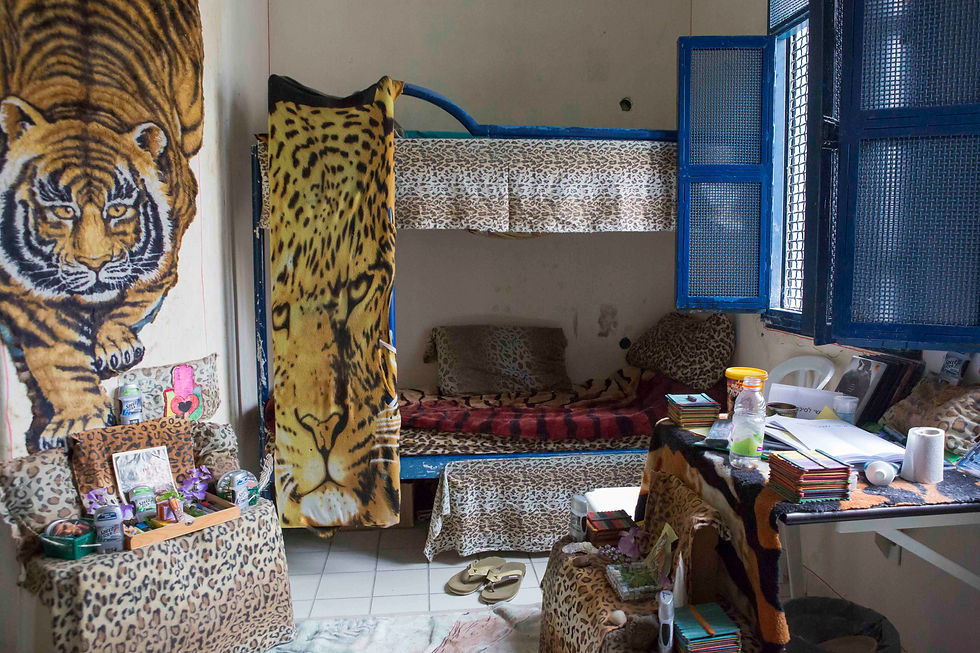
A prisoner’s cell in the Ofek Prison for youth (14-18) in Hasharon complex near Tel Mond. The prison comprises four wings and 246 beds. The most common reasons for sentencing these youth are disturbance of public order, fights, attacks, robbery, the possession of weapons and drugs, sexual offences, attempts to kill and murder.
4 March 2013

2nd prize
Single
Urbanism
Ohad Zwigenberg
ynet
In the hills of Jerusalem, near the Sataf, on an area of 24 dunams, stands the abandoned skeleton of a large building which was once planned as a hotel. From time to time IDF units train there and parties are held by young people. Recently there has been talk of building an old age home on the site.
18 April 2013

3rd prize
Single
Urbanism
Independent
Udi Goren
A child returning home from school against the background of graffiti on the main street of the Aida refugee camp near Bethlehem. The graffiti immortalizes the security prisoners from Aida, imprisoned in Israel for long periods, many of them for life. These prisoners constitute the local symbol of opposition to the occupation and a source of pride. In the center of the graffiti – writing about the acceptance of Palestine as an observer state in the UN.
2 January 2013

1st prize
Series
Urbanism
Uri Pinner
The Hottest Place in Hell
Scenes from what was once the Dolphinarium on the Tel Aviv beach, after approval of the plans to demolish the building and complete the boardwalk.
The venue, which for years was a site of changing attractions, wedding halls and dancing clubs - was later abandoned and neglected. In cultural and pseudo-archeological terms this is a stratified site: a site which was associated with legends, trauma, and mystery.
6-13 July 2013

2nd prize
Series
Urbanism
Independent
Dana Friedlander-Oren
Between land, water, and sky, in Tel Aviv covered in a cloud. The misty cloud moved in from the sea and progressed along the coastal cities during the evening and night until the following morning.
2-3 May 2013

Single
Urbanism
Independent
Liron Weissman
Lydia, aged 92, a new immigrant from Russia. In the past she was a paramedic in the Russian Army, and today lives in Kfar Shalem in Tel Aviv.
30 April 2013
Short Series
Long Exposure
Video
Avishai Sivan
Roundabouts of Or Yehuda.
The mayor of Or Yehuda changed the face of the city by introducing new, uniquely aesthetic roundabout, a kind of illustration of country life. Filming the squares at night demonstrates the additional lighting and makes room for an expressive soundtrack. In this film Or Yehuda looks as if it underwent plastic surgery, both glaring and revitalizing.
April 2013
Directing, photography, sound and editing: Avishai Sivan
Uriel Sinai
My baby is joining the army. According to the Military Service Law it is compulsory for every Israeli citizen reaching the age of 18 to enlist in the army. Every year thousands of young men enlist in the various IDF units. Last August Uriel Sinai and Tali Ben Ovadia accompanied Aviv Ben Yosef and his mother Irit on the day of Aviv’s induction to the Nahal Brigade. The photography crew followed them from their home in Holon to the induction center at Tel Hashomer.
August 2013
Director: Tali Ben Ovadia and Uriel Sinai Photograph: Uriel Sinai
Editor: Dror Bachar; Sound: Amit Ella
Assistant photographer: Ehud Eitan
Research: Itzik Levy
From: Friday Night with Tali Moreno and Alon Ben David, Hadashot 10
Daniel Bar On
Iron Dome.
After six days of fighting during the Operation Pillar of Defense, Keshet reporter Ben Shani and photographer Daniel Bar On went down south in search of “the picture” that had not yet been shown on the newscasts. They reached a plowed field on the outskirts of Ashdod where the Iron Dome battery was deployed, in order to show in a brief period of four minutes what happened in the field, while the camera was positioned facing away from the battery.
November 2012
Director: Ben Shani
Photograph: Daniel Bar On
Editor: Oded Turi
From: Four Minutes, an Uvda project, Keshet Broadcasting
Hadas Parush
Champion of the Desert.
Hazem Abu Queder became the hero of the Abu Queder village (Alzarnug, an unrecognized village in the Negev, some 14 kilometers south-east of Beersheba). Due to his love of martial arts Hazem built a gym in 2013, and began teaching and training the village children. By teaching the children karate Hazem instills in the children the values of self-confidence, tolerance, restraint, and mutual respect. In addition to a sense of empowerment which he gave the Abu Queder community, he created mutual interest among the village children and children from other communities through joint training sessions and competitions against martial arts clubs throughout Israel and the world. Thanks to Hazem, the unrecognized village, which does not appear on any official geographical map of the State of Israel, is now on the map of martial arts.
October – November 2012
Directing, photography, sound and editing: Hadas Parush
Appeared on the Jerusalem Post website, www.jpost.com