

Photography: Oren Aharoni
Local Testimony 2017
Gallery
2017
Photo of the Year | News | Daily Life | Portraits | Culture and Art | Nature and Environment | Sport
Zachi Becker, representative of MUSA - Eretz Israel Museum, Tel Aviv
Dr. Dor Guez, artist, head of the MFA program at the Bezalel Academy of Arts and Design
Sagit Zluf Namir, photographer, artist and lecturer
Mark Yashaev, photographer and artist
Ilan Itzhayek, editor-in-chief, Xnet website, Yedioth Ahronoth
Vardi Kahana, photographer and Local Testimony 2014, 2015
and 2017 curator
Atta Awisat, photojournalist
Hanna Shaviv, photographer, artist and lecturer
Ami Steinitz, curator and member of the Local Testimony editorial board




Photo of the year

Noam Moskowitz
Evacuation of Amona. Security forces break open the synagogue doors.
Amona
2 February 2017
News

1st prize
Single
News
Amit Shabi
Yediot Aharonot
Miriam Naor, President of the Supreme Court of Israel, shortly before the ceremony of the Jewish Law Fellow Award, conferred on Judge Elyakim Rubinstein, at the President’s Residence.
2nd prize
Single
News
Avishag Shaar-Yashuv
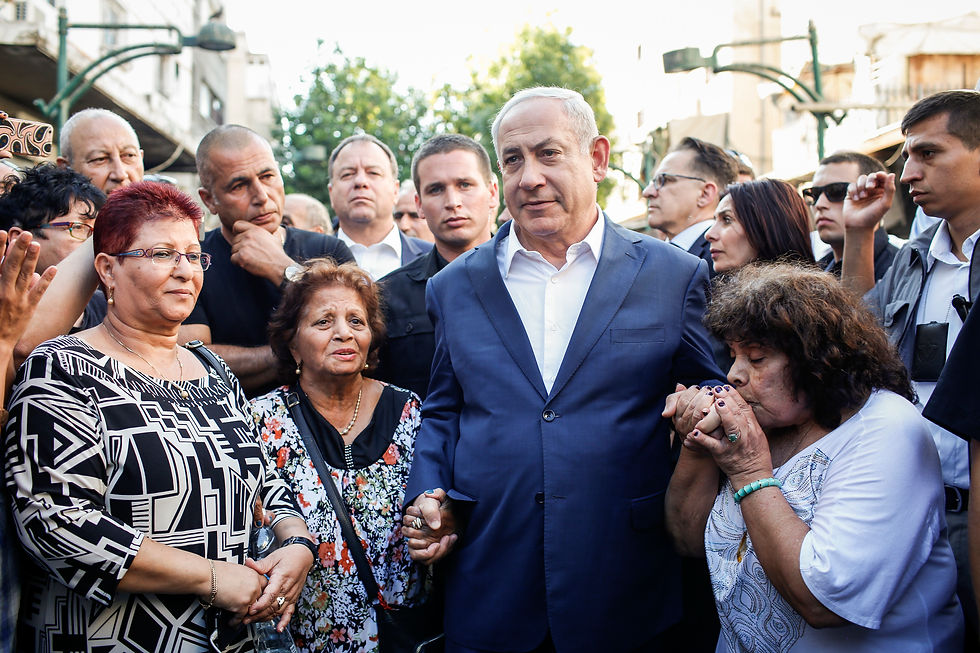
Prime Minister Benjamin Netanyahu touring southern Tel Aviv.

3rd prize
Single
News
Ohad Zwigenberg
Yedioth Ahronoth
Ultra-Orthodox from the Hapeleg Hayerushalmi (followers of Rav Shmuel Auerbach) demonstrating against enlistment of ultra-Orthodox in the IDF.

1st prize
Series
News
EPA
Abir Sultan
From its earliest days, Amona was an illegal military outpost, which was settled in August 1995 near Ofra. The settlement’s land was privately owned by local Palestinians. In 1996 three caravans were set up and inhabited by settlers. Over time more families joined, and prior to late 2005 some thirty families lived on an area of approximately 400 dunams.
In February 2006, the inhabitants of nine illegal permanent buildings were evacuated and the buildings demolished, after the police force evacuated thousands of barricaded demonstrators. In 2008, several Palestinian landowners appealed to the Supreme Court arguing that the entire settlement was built on land that was not owned by the inhabitants. In late 2014 the Supreme Court ruled that the entire outpost should be evacuated within two years.
In early 2015 some fifty families lived in the settlement which was the largest outpost in Judea and Samaria. The Settlement Movement launched a wide-ranging media campaign with the objective of annulling the Supreme Court ruling, however after repeated postponements a decision was taken to evacuate the settlement in the winter of 2017. Again, hundreds of young people came and barricaded themselves. Scenes
from the Gaza disengagement were reenacted, but the protest was of no avail. On 1 February the settlement was evacuated and several days later, demolished.

2nd prize
Series
News
אריאל שליט
Huge fires broke out in several locations in the center and north of Israel. The fire demolished houses and hundreds of dunams of natural woodland.

3rd prize
Series
News
AFP
Ahmad Gharabli
On 14 July, three Israeli Arabs, residents of Umm al-Fahm, shot to death two Border Police officers at the Al-Aqsa Mosque square (1). In response, the prime minister ordered placing metal detectors at the gates leading to Temple Mount. Members of the Waqf opposed this move, instructing the Muslims to refuse to go to Temple Mount until the detectors were removed, calling them to pray demonstratively outside the compound (2). Protest activity led to harsh confrontations between Palestinian youth and the Security Forces in East Jerusalem and the West Bank (3, 4). The cabinet decided to remove the metal detectors and replace them with different security means. Members of the Waqf opposed this move as well and violent conflicts continued in the course of which four Palestinians were killed (5). On 21 July a terrorist entered the settlement of Halamish, murdered three members of the Salomon family and severely injured the mother. He claimed that he did this for Al-Aqsa. The crisis lasted for two weeks and eventually Israel removed all security measures from the compound (6).

Single
News
oren Ben Hakoon
Israel Hayom
Director of the Hadassah Medical Center, Prof. Zeev Rotstein, ordered to combine the pediatric and adult hematology-oncology transplant departments. This move was part of an overall financial recovery plan for the hospital. Prof. Mickey Weintraub, head of the department, and the team of physicians, refused to carry out this move, claiming that it would be detrimental to the children. The children’s parents protested and the attempts of the minister of health to bring about a compromise between the parties, failed. Finally, in response to the physicians’ requests, the matter was submitted to the Supreme Court, which ruled in favor of the management. Prof. Weintraub and his team resigned from the hospital, and the children were dispersed in various hospitals for treatment.
In the photo, the father of one of the children treated in the department verbally attacks the hospital director, Prof. Rotstein.

Single
News
Noam Revkin Fenton
Leah Goldin, mother of kidnapped soldier Hadar Goldin, hurling a paper cup filled with water at Knesset Members David Bitan and Miki Zohar, following their insensitive remarks at the State Control Committee meeting which reviewed the conclusions of the Operation Protective Edge.

Single
News
Ohad Zwigenberg
Yedioth Ahronoth
Evacuation of Jewish inhabitants whose homes were built on Palestinian land.

Single
News
Freelance photographer
Miriam Tsachi
Funeral of Sergeant Elhai Teharlev, who was murdered in a vehicle-ramming attack. In the photo, his younger brother.

Single
News
Reuters
Amir Cohen
The labor party’s chairperson, Avi Gabbay, at his victory speech at the party primaries.

Single
News
Reuters
Ronen Zvulun
Soldiers evacuated from a vehicle-ramming arena, in which four of their companions were murdered and thirteen injured.

Single
News
Polaris Images
Ziv Koren
Knesset Member Oren Hazan pushing himself into a selfie photo with US President Donald Trump, during the official ceremony on the occasion of his first visit to Israel.

Single
News
Polaris Images
Ziv Koren
Funeral of Israel’s former president, Shimon Peres, who passed away at the age of 93. In the photo, Peres’s great grandson, Ari.
Daily Life
Potrtaits
Culture and Art

1st prize
Single
Urbanism and culture
Guy Aloni

2nd prize
Single
Urbanism and culture
Flash 90
Hadas Parush
A hot-air balloon in the shape of the portrait of Vincent Van Gogh floating over spectators at a hot-air balloon festival.

3rd prize
Single
Urbanism and culture
AVISHAG SHAAR-YASHU
A model in a bathtub filled with milk, displaying jewelry.

1st prize
Series
Urbanism and culture
Independent
Felix Lupa

2nd prize
Series
Urbanism and culture
Ilan Ben Yehuda

3rd prize
Series
Urbanism and culture
Independent
Edward Kaprov
Portraits photographed on a collodion wet glass plate - an age-old process, dating from the early days of photography. The process is cumbersome albeit fascinating. The photographed image is created on transparent glass before the eyes of the spectator.

Single
Urbanism and culture
Dor Kedmi
Works for flattening Dizengoff Square and restoring it to street level.

Series
Urbanism and culture
Danielle Shitrit
Zion Riders is a club of Israeli Harley Davidson riders. The motorcyclists meet every day at Yosef Boni Hayat’s Sisi Bar near the Kfar Habad junction. Beneath the tough visage of the Harley Davidson gear, one finds a varied group of people.

Single
Urbanism and culture
Nir Slakman
נונה שאלאנט, דראג קווין ואמנית אופנה תל־אביבית.

Single
Urbanism and culture
Moti Milrod
Renovation on the beach.

Single
Urbanism and culture
Amit Shabi
Yediot Aharonot
A Sufi dancer at the Jerusalem Arts Festival.

Single
Urbanism and culture
Ayala Halel Nahmias
The prop storeroom of Channel One that was closed down after forty-eight years of broadcasting.

Single
Urbanism and culture
Flash 90
Miriam Alster
Removal of a sculpture in the image of Prime Minister Benjamin Netanyahu, placed on Rabin Square by artist Itai Zalit.
Nature and Environment

1st prize
Single
Nature and environment
Asaf Friedman

2nd prize
Single
Nature and environment
Haim Taragan
Haaretz
Young boys jumping into a pool of the Ein Yehuda spring, Kibbutz Ein Hanatziv.

3rd prize
Single
Nature and environment
Ohad Zwigenberg
Yedioth Ahronoth
The access road to the At-Tur neighborhood and the Mount of Olives.

1st prize
Series
Nature and environment
Panos Pictures
Ahikam Seri
Every winter, huge flocks of starlings arrive in Israel from cold Europe to find a warm home here. During the day, the starlings fly over the waste site and in the evening, they gather and land on the power plant to spend the night.

2nd prize
Series
Nature and environment
Yaniv Nadav
Manmade changes to the landscape.

3rd prize
Series
Nature and environment
Ezra Zahor
Shade coverings set up by sheep and goat shepherds, occasional workers and loners, create a strange architecture in the desert.

Single
Nature and environment
Nimrod Gluckman

Single
Nature and environment
Diego Rosman
Nir Avneyon tightrope walking at a height of fifty meters, along a course of a hundred and fifty meters.

Single
Nature and environment
Tamar Eisenberg

Single
Nature and environment
Moshe Prager
A short-toed snake-eagle, one of the largest and most impressive birds of prey seen in the skies of Israel. Its name attests to its main source of food - snakes.
Sport

1st prize
Single
sport
Ilan Spira
A moment before the Israeli team enters the Teddy Stadium for the opening ceremony of the Maccabiah games.

2nd prize
Single
sport
Oren Aharoni
Yedioth Ahronoth
The Israeli rhythmic gymnast, Victoria (Tori) Filanovsky at the Grand Prix competition, where she won one bronze and two silver medals.

3rd prize
Single
sport
Gilad Kavalerchik
A competitor at the Mud Day race - a thirteen-kilometer combat fitness route, which comprises twenty-two hurdles.

1st prize
Series
sport
European Junior swimming championships.

2nd prize
Series
sport
Ilya Melnikov
Haaretz
Paralympic athletes before the Rio de Janeiro Olympic Games.